Exploring Artificial Kidneys
Table of Contents
- Fundamentals: How kidneys and nephrons work
- More on the nephron: How it works
- Artificial kidneys (Bags of Artificial Nephrons)
- Imagining what a synthetic artificial kidney would look like
- References
Fundamentals: How kidneys and nephrons work
- Behold, the wonderful bean-shaped thing we owe our life:

- In the most basic sense:
- Kidneys work by filtering blood and turning the waste into pee.
- And the apparatus that enables this process is the “nephron” which is the microscopic structural and functional unit of the kidney, responsible for filtering blood, balancing water and electrolytes, and producing urine. Each human kidney contains about 1 million of these units, which perform their life-sustaining tasks through filtration, reabsorption, and secretion.[1][2]
More on the nephron: How it works
Artificial kidneys (Bags of Artificial Nephrons)
- An artificial kidney may be imagined as a block housing nano and micro-structural elements that mimic the work of these nephrons.
- Imagine an assembly of millions of micro and nanofluidic channels, pores, pumps, and sensors all working in unison to replicate and surpass kidney function.
- Power may be delivered by equipping the force generation and sensor elements with motor molecules which undergo reactions to produce work. e.g. Motors described in previous work [3]
Imagining what a synthetic artificial kidney would look like:
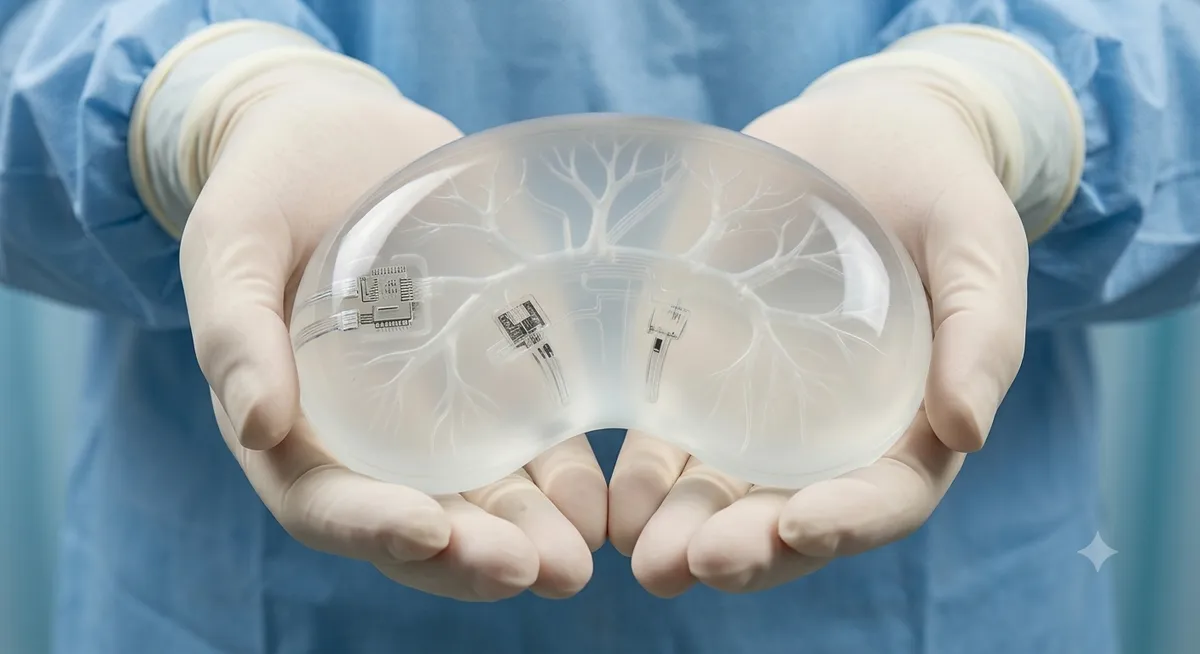
- Concept one:
Imagine a device that appears to be a translucent sac of gel with with some visible electronic elements and internal vascular structures, but on the invisible nanoscopic scale, millions of pores, pumps and channels. Provisions may be made for tubes accepting blood in and exit of it into the greater cardiovascular system, accessories such as RF elements for wireless communication, and a chemical/electronic battery pack as well.
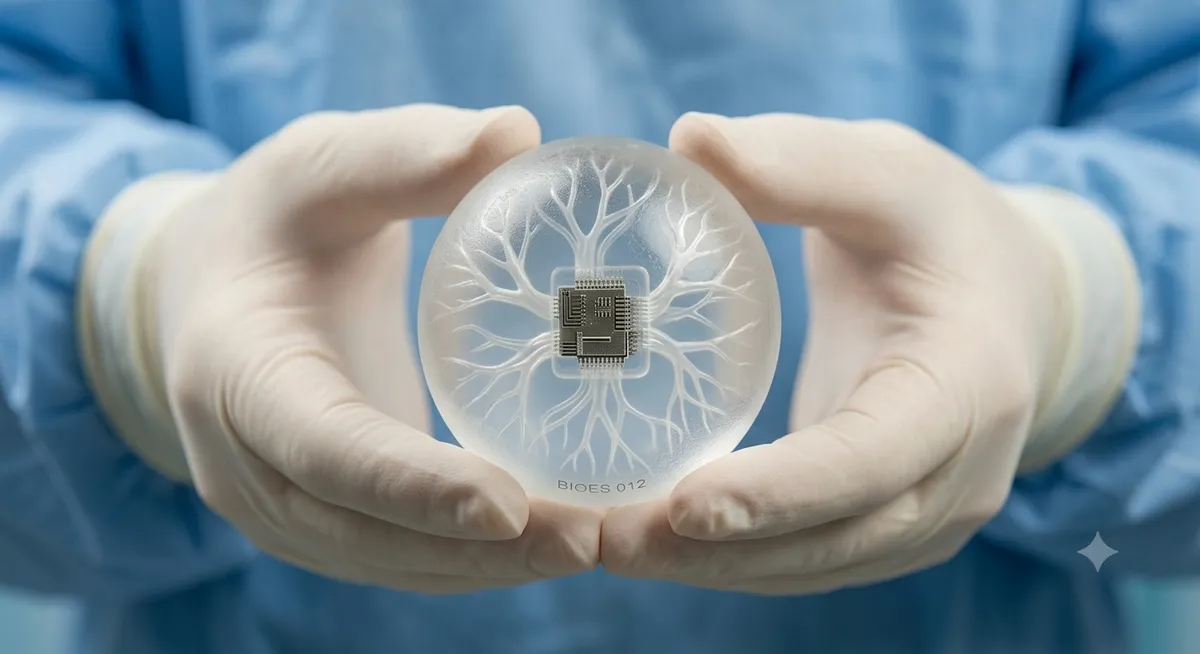
- Concept two:
Modifications beyond traditional biological design would give the bioengineer the ability to edit the organ’s form and functionality in ways such as significant size reduction, designing it as a sphere rather than a bean, multi-artery capability (a kidney accepting blood from more than one inlet. say 4 at a time), amine group recycling and storage, etc.
References
- Nephron, Wikipedia: https://en.wikipedia.org/wiki/Nephron
- Lote CJ (2012). Principles of Renal Physiology (5th ed.). Springer.
- Design Of An Experimentally Accessible Autonomous Medical Nanoagent :Computation, Sensing, Perturbations, And Locomotion Via Motor Protein Signal Transmission, by Colin Kakama, https://archive.org/details/design-of-an-experimentally-accessible-autonomous-medical-nanoagent-computation-