Artificial Neurons and nerves
Table of Contents
- Quick intro to neurons & the nervous system
- What artificial neurons would look/function like
- Assembling them
- Biggest anticipated non-trivial challenges
- Images of what these artificial neurons would look like
Quick intro to neurons & the nervous system
Intro to the nervous system:
- Crash Course Anatomy & Physiology, The Nervous System: https://youtube.com/playlist?list=PLpUnbl0Sf8l1MqNPRp04H2UlNV6_egy2J&si=W26BzoTGp78EIvSD
How neurons work
- Nervous system: https://youtu.be/qPix_X-9t7E?si=ruldRx_lABdQA7v4
- Action Potentials: https://youtu.be/OZG8M_ldA1M?si=cYJvReiFzodQ-Wsq
- Synapses: https://youtu.be/VitFvNvRIIY?si=vYztF3T88VjmxpoQ
Types of neurons (by function)
- Interneurons (association neurons) - Located entirely within the CNS, connecting sensory and motor neurons. They handle processing, reflexes, and integration
- motor neurons - Carry signals from the CNS out to muscles and glands, triggering movement or secretion.
- Sensory neurons (afferent) - Carry signals from sensory receptors (skin, eyes, ears, etc.) toward the central nervous system (CNS).
Types of neurons (by structure/shape)
- Multipolar - one axon, many dendrites (most common, e.g., motor neurons)
- Bipolar - one axon, one dendrite (e.g., retinal cells, olfactory neurons)
- Unipolar/pseudounipolar - single process that splits (most sensory neurons)
- Anaxonic - no distinguishable axon (rare, found in retina/brain)
These neurons bundle up into nerves(neuron fibres) and carry signals everywhere.
What artificial neurons would look/function like
Right off the bat, a good name for these would be “Neurocytes”. And when bundled into nerve fibres, “neuronium”(noun): Any nerve-mimetic substrate. I have previously described it as substrate capable of running conscious experience. But that is less empirical. Nerve-mimesis is a a more apt description.
Replicating neurocellular function (action potentials and receptor specificity)
| Structure/function | Biological material space | De novo materials exploratory space |
|---|---|---|
| A porous nanomembrane. | phospholipid bi-layer | cellulose, protein, or any other biocompatible material. |
| Ligand & ion sensitive nanogates & receptors | protein | anything that satisfies biocompatibility and required sensitivity to transmitted ligands and voltages of choice. |
| neurotransmitters & ions | Ka+, Na+, dopamine, Serotonin, Glutamate, Norepinephrine, etc | TBD |
| neurotransmitter vesicles | lipid vesicles | - retractable hollow cavities inside the probe - semi-porous probe walls that can uptake-release transmitters when excited - etc. |
| cytoplasm | Cytosol(dissolved salts, enzymes, and the specific ions), ribosomes, proteins, etc. | TBD |
Assembling them.
- Positional assembly of nanometer monomers would be required to assemble these neurocytes.
- The two most promising approaches being:
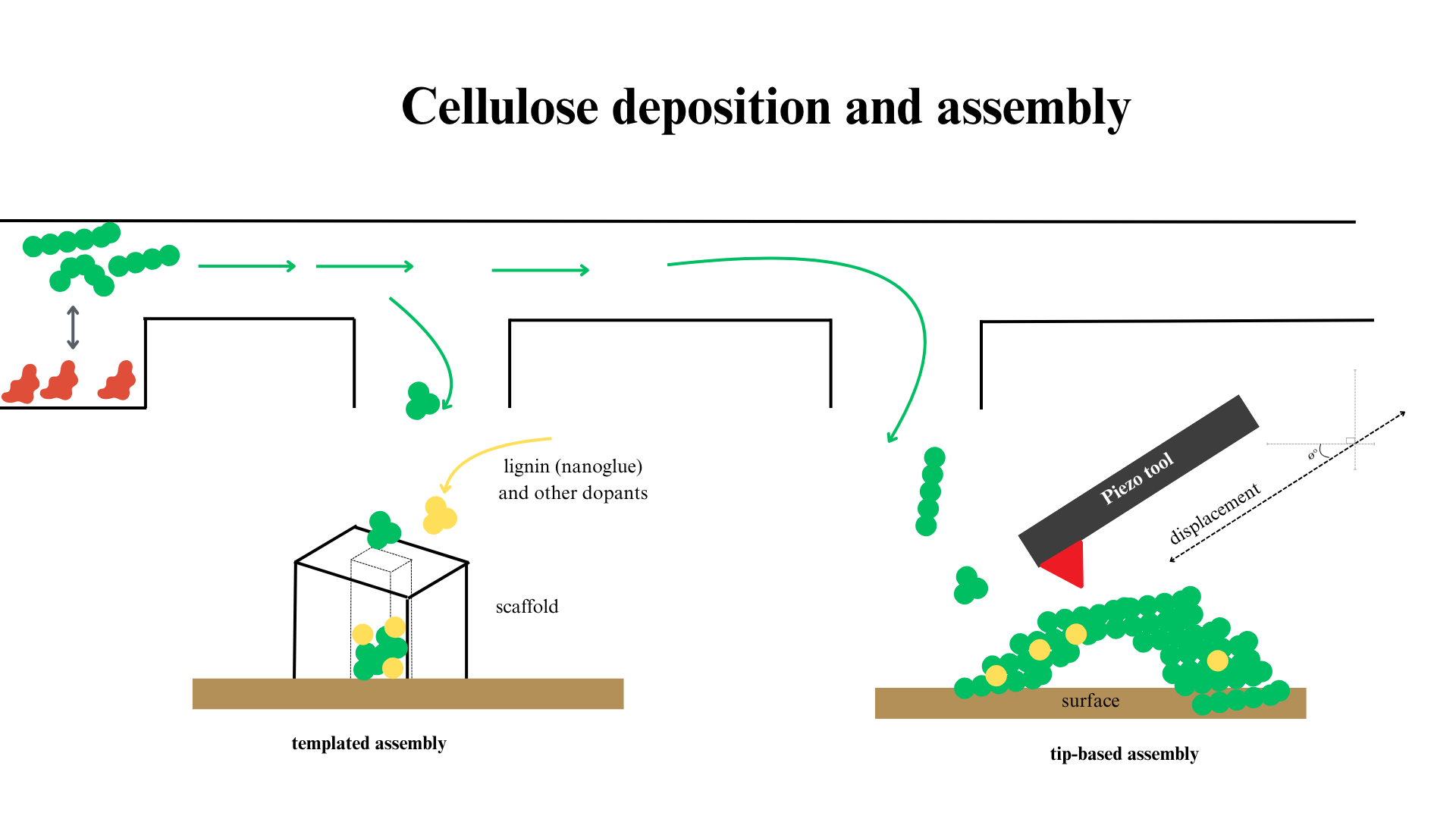
- Depositive nanoassembler (near term)
Where nanometer-sized feedstock monomers is composited with a nanoadhesive to form nanostructures with controlled geometry.
See: https://colinkakama.bearblog.dev/how-to-make-nanoprobes-with-a-nano-3d-printer/
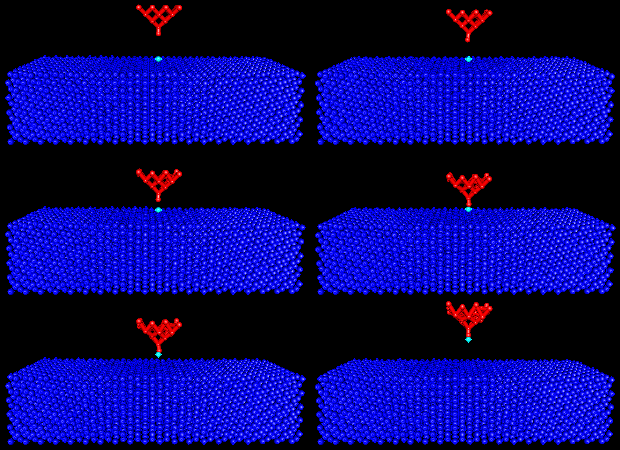
- Mechanosynthesis (far term)
Where reactive atoms are individually picked, moved through 3D space and mechanically forced together to form molecules and later whole nanostructures.
See: https://www.molecularassembler.com/Nanofactory/DMS.htm
Biggest anticipated non-trivial challenges
- There is a lot of chemistry going on in neurons (Gene expression/non obvious proteic activity, etc.) that artificial neurons would have to replicate outside of simple signalling.
Images of what these artificial neurons would look like
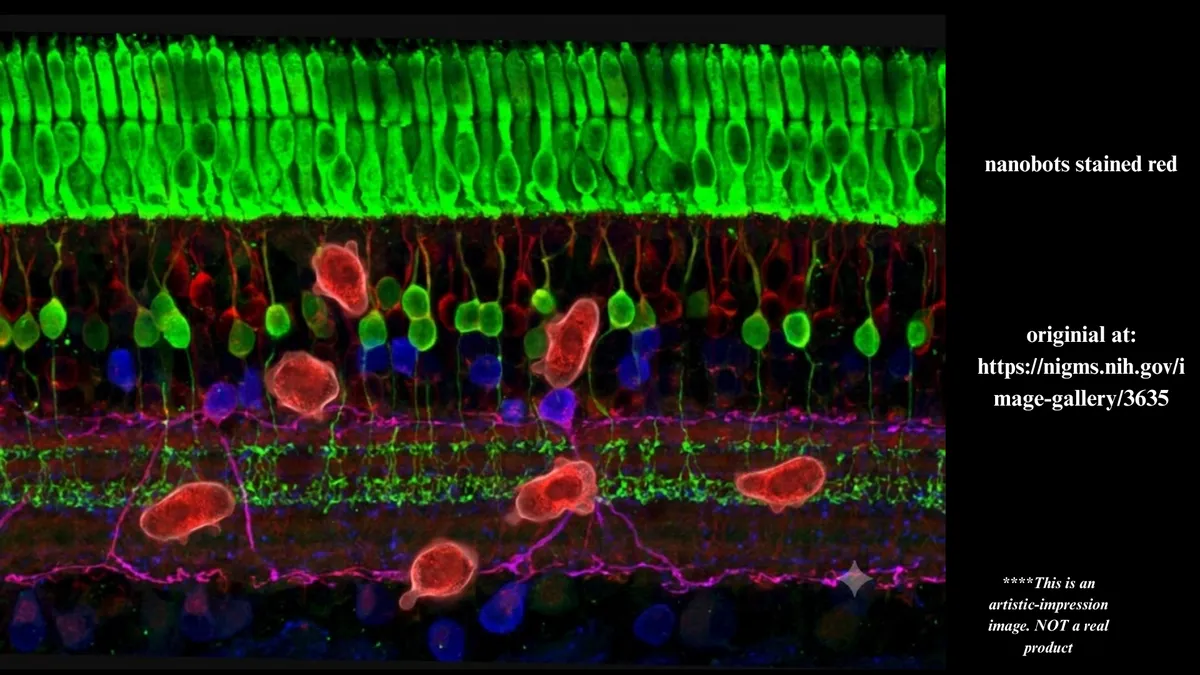
- Artificial neurons in a retina image
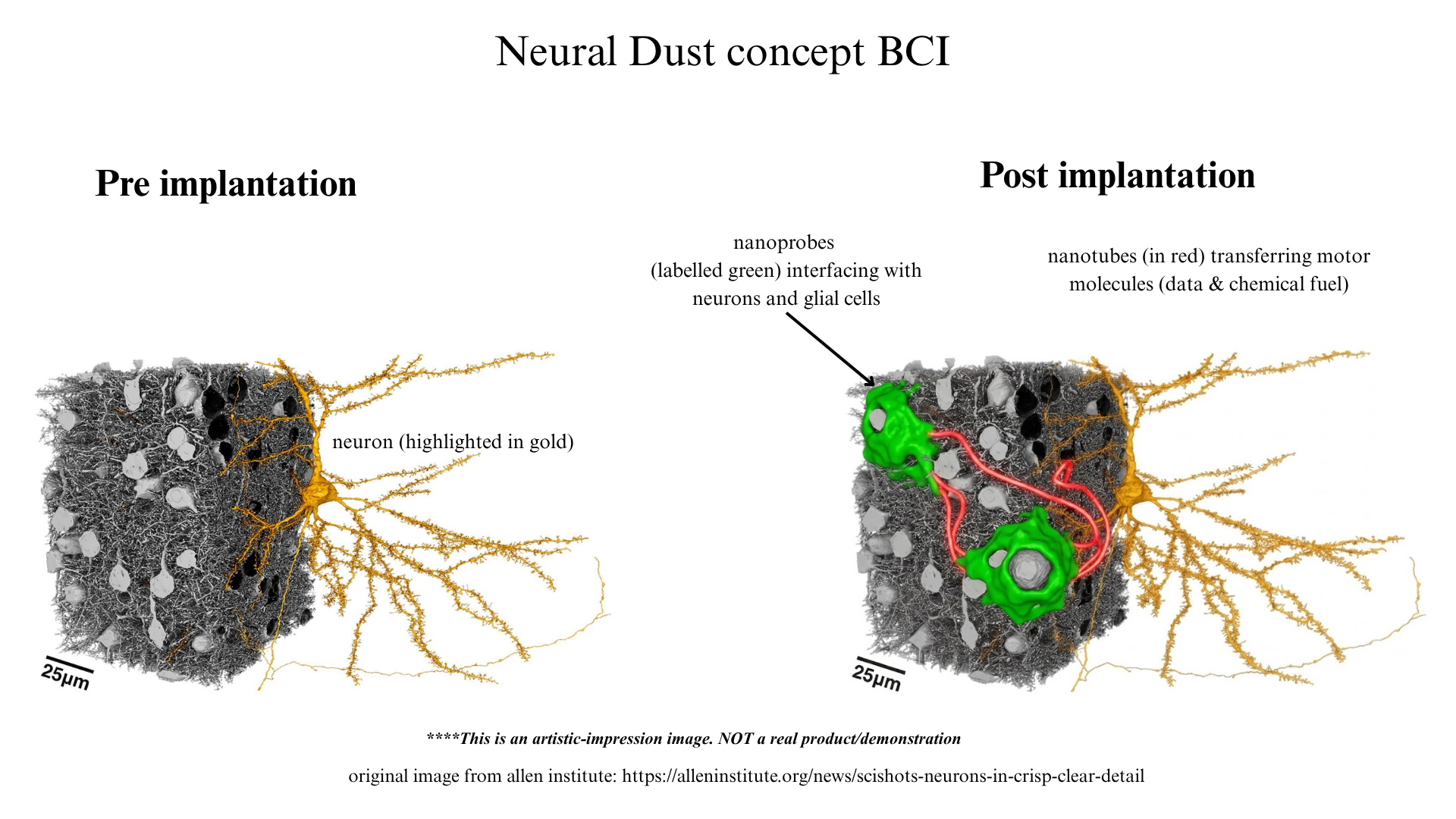
- Artificial neurons in the brain