We do not have true cybernetic medicine
A side project of mine is tracking scientific progress in cybernetic technologies. I genuinely believe the future of humanity involves replacing sick, dying, and aging body parts with always-healthy, easily repairable machine ones.
And I don't just mean implants. I mean cybernetic instruments that actively sense the biology around them, at biochemical resolution, and vary their input because of it. A face fat implant doesn't count as cybernetics. A facial nerve stimulation and replacement implant does. But of course, it's hard. Below is a screenshot of the dashboard I use to track new technologies as I come across them.
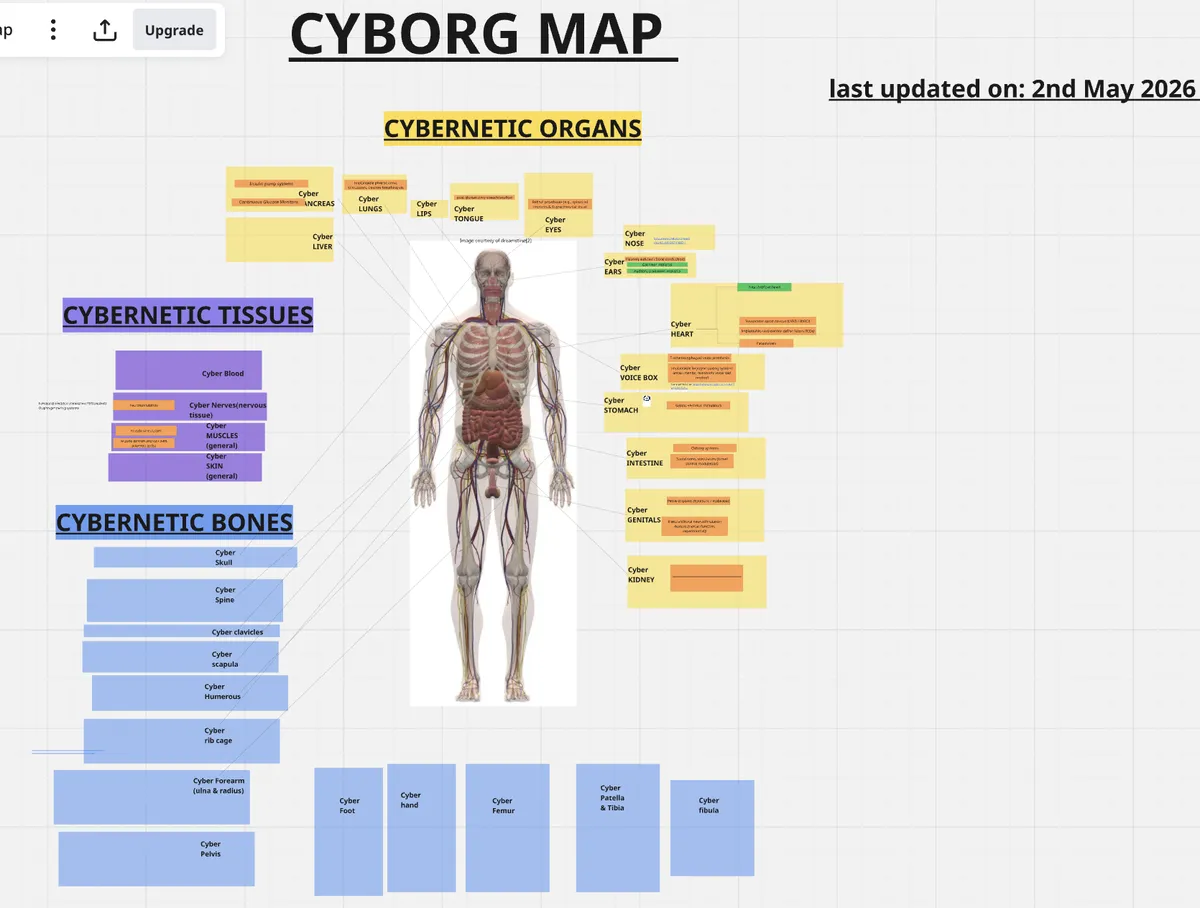
Orange represents partial function replacement and augmentation devices I've documented so far. Green represents full function replacement, where you can remove the natural part and put in the artificial one, even knowing it's a V1 and not yet as reliable as what it replaces. Notice how blank the bones section is. You'd think bones would be the easiest, right? Yes, we have titanium femurs and ribcages. But they just sit there. They don't self-repair, don't sense, and don't deter the immune system from reacting to them. They're dumb implants. Not cybernetic at all.
If we want the cyberpunk era of bionics, we need a reliable way to put a machine into the body and have it sense and communicate with the body. That property has been elusive up to now. The cause seems obvious to me. Current electronics, as they exist today, are just incompatible with biology. Even BCIs engineered to be superficially and functionally compatible. We need a paradigm shift in bioelectronics. I nominate nanomechanical devices, like the kind Eric Drexler pioneered.